
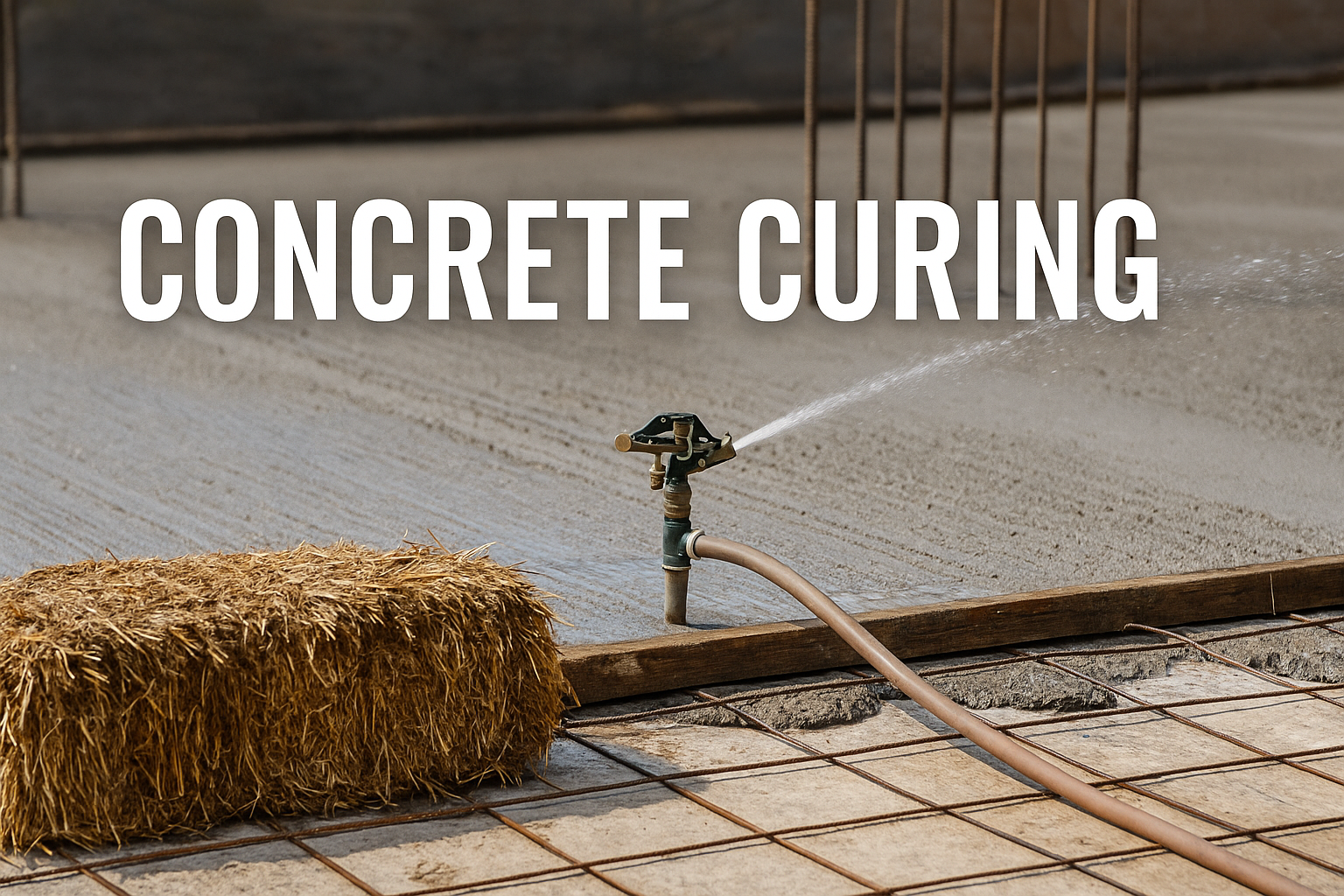
Concrete Curing: Methods, Importance & Best Practices
Concrete is the most widely used construction material in the world, known for its strength, durability, and versatility. However, achieving these qualities in concrete doesn't happen automatically after placement. One of the most critical processes that determine concrete's long-term performance is curing.
In this blog, we explore everything you need to know about concrete curing: its importance, methods, timelines, and industry best practices to help you ensure strong and durable concrete in your projects.
What is Concrete Curing?
Concrete curing is the process of maintaining adequate moisture, temperature, and time conditions in the concrete after it has been placed. This process allows the cement in the mix to properly hydrate, gaining strength and achieving desired durability.
Proper curing ensures that the concrete doesn't lose moisture too quickly, which can lead to surface cracking, lower strength, and reduced resistance to weathering and chemicals.

Why is Curing Important?
Curing plays a crucial role in the final quality of concrete. Here's why:
-
Strength Development: Proper curing can improve compressive strength by up to 50% compared to uncured concrete.
-
Crack Prevention: Moisture retention helps prevent surface shrinkage and cracking.
-
Durability: Well-cured concrete resists freezing, thawing, chemical attacks, and abrasion better.
-
Dust Control: Curing minimizes surface dusting caused by insufficient hydration.
-
Improved Bond: Cured concrete forms a stronger bond with reinforcement bars and finishing layers.
When Should Curing Begin?
Curing should begin immediately after finishing operations (like troweling or screeding). In hot weather, even a delay of 1–2 hours can cause surface damage. The initial curing period is often referred to as the critical curing phase.
How Long Should Concrete Be Cured?
The standard recommendation is:
-
7 days for OPC (Ordinary Portland Cement) concrete.
-
10–14 days for blended cement (PPC, PSC, etc.).
However, for maximum strength and durability:
-
28 days of curing is ideal for most projects.
Curing time can vary based on:
-
Type of cement
-
Mix design
-
Ambient temperature and humidity
-
Use of admixtures

Methods of Concrete Curing
Concrete can be cured in several ways, each suitable for different project needs and environmental conditions. Common methods include:
1. Water Curing
-
Ponding: Creating pools of water on flat surfaces like slabs.
-
Sprinkling or Fogging: Spraying water at intervals to keep the surface moist.
-
Wet Coverings: Using burlap, hessian, or cotton mats soaked with water.
2. Membrane Curing
-
Application of curing compounds (liquid membranes) that form a barrier to prevent moisture loss.
-
Common in roads, bridges, and remote areas where water is scarce.
3. Steam Curing
-
Used in precast concrete industries.
-
Accelerates strength gain by applying controlled steam at elevated temperatures.
4. Plastic Sheet Covering
-
Plastic films cover the surface and retain internal moisture.
-
Best for small to medium jobs and when water curing is impractical.
5. Curing Blankets
-
Insulating blankets used in cold climates to maintain temperature and moisture.
Factors Affecting Concrete Curing
-
Weather Conditions: Hot weather speeds up evaporation; cold delays hydration.
-
Concrete Composition: Water-cement ratio, type of cement, admixtures.
-
Size and Shape of Element: Thicker sections retain moisture longer.
-
Surface Finish: Exposed concrete surfaces dry faster and need extra attention.
Common Curing Mistakes to Avoid
-
Delayed curing start.
-
Insufficient curing duration.
-
Uneven or incomplete moisture coverage.
-
Neglecting curing in cold or hot climates.

Curing in Special Conditions
Hot Weather Curing
-
Use windbreaks and sunshades.
-
Start curing immediately after finishing.
-
Apply curing compounds or water frequently.
Cold Weather Curing
-
Use insulated blankets.
-
Prevent freezing in early-age concrete.
-
Extend curing period if hydration is slow.

Conclusion
Curing is not just a formality—it's a vital part of concrete construction. The investment in time and resources to cure concrete properly pays off in the long run by ensuring strength, durability, and resistance to environmental stress.
Whether you're building a small residential slab or a massive infrastructure project, understanding and applying proper curing techniques is essential for the success of your structure.
Concretewale.com encourages contractors, engineers, and builders to prioritize curing as a core part of quality concrete work. For curing products, equipment, or expert services, feel free to explore our platform today!
