Concrete Is No Longer a Boring Material!
For decades, concrete was seen as a dull, grey, purely structural material—used for foundations, slabs, and walls, then hidden under tiles, paint, or plaster. But that perception has changed completely.
Today, concrete is design-driven, innovative, sustainable, and expressive. It’s no longer just a construction material—it’s a creative medium.
Why Concrete Was Once Considered “Boring”?
Traditionally, concrete was:
a. Grey and uniform.
b. Used mainly for structural purposes.
c. Hidden behind finishes.
d. Chosen for strength, not appearance.
Its role was functional, not aesthetic. Designers rarely celebrated it—they covered it.
What Changed? Why Concrete Is No Longer Boring?
Concrete evolved because design demands changed, and technology caught up.
1. Concrete as a Design Surface.
Modern concrete can now be:
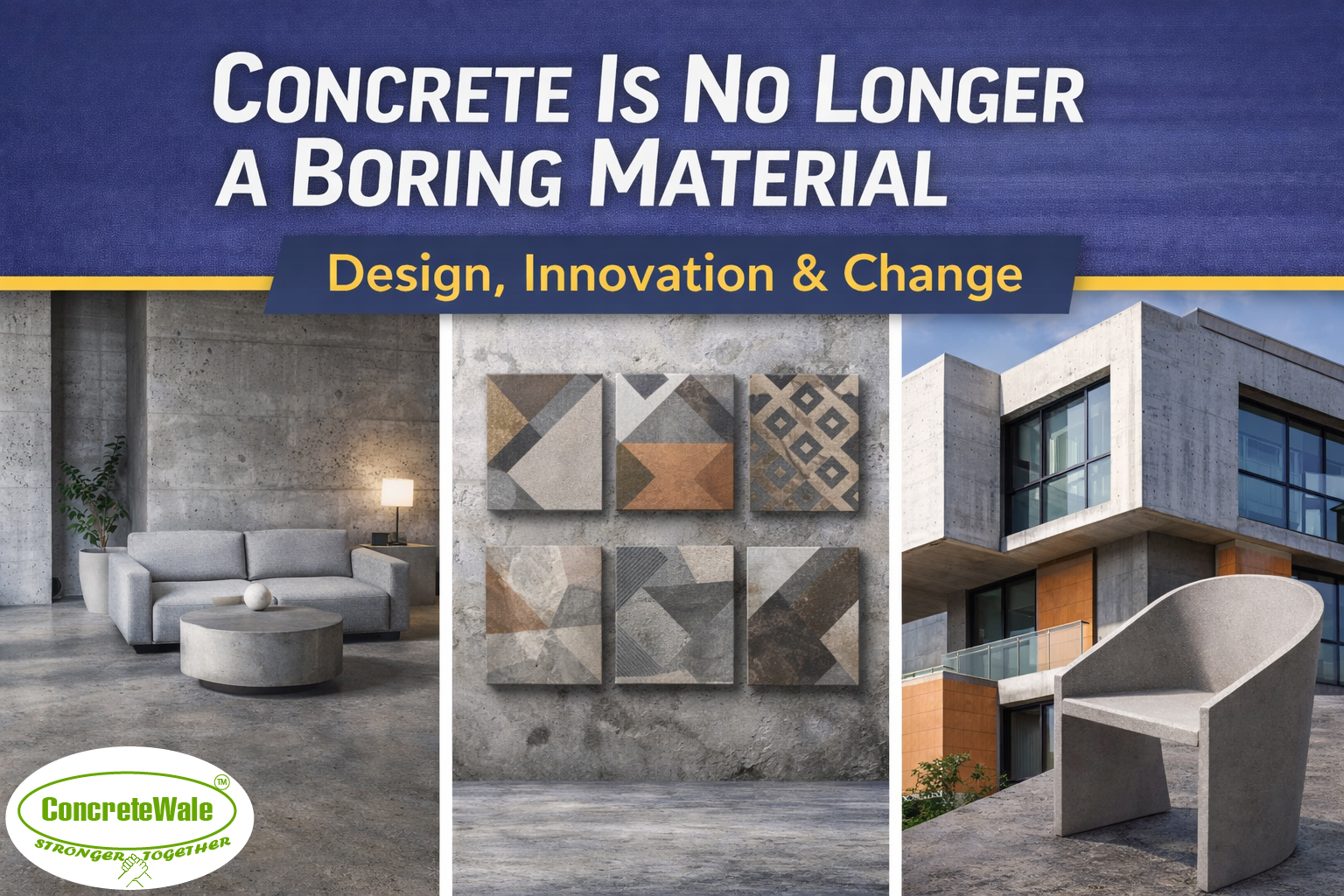
a. Polished to a mirror-like finish.
b. Textured, patterned, or stamped.
c. Colored in earthy or bold tones.
d. Exposed intentionally, not hidden.
Polished concrete floors, exposed concrete walls, and architectural concrete facades are now design features, not compromises.
2. Decorative & Architectural Concrete.
Concrete today is used to create:
a. Designer flooring.
b. Feature walls.
c. Custom tiles and panels.
d. Sculptural elements.
e. Concrete furniture and countertops.
Architects and interior designers now choose concrete because of how it looks, not in spite of it.
3. Innovation Inside the Mix.
Concrete is no longer “just cement, sand, and aggregate”.
Modern concrete includes:
a. Chemical admixtures for flow, strength, and durability.
b. Fibres for crack control.
c. High-performance concrete (HPC).
d. Self-compacting concrete (SCC).
e. Ultra-high-performance concrete (UHPC).
These innovations allow thinner sections, smoother finishes, and complex shapes that were impossible earlier.
4. Sustainability Changed the Story.
Concrete is now part of the sustainability conversation:
a. Low-carbon cement alternatives.
b. Use of industrial by-products.
c. Longer service life.
d. Reduced maintenance.
When designed correctly, concrete can be durable, efficient, and responsible—not wasteful.
5. Concrete in Everyday Design.
Concrete is no longer limited to large projects.
Today, you’ll see concrete used in:
a. Homes
b. Cafés and retail spaces
c. Offices
d. Public art and street furniture
e. Landscaping and outdoor design
Its raw, honest look fits perfectly with modern, minimalist, and industrial styles.
6. Technology Made Concrete Creative.
Advances in:
a. Mould design.
b. Casting techniques.
c. Surface finishing.
d. Coatings and sealers.
have turned concrete into a customizable material, not a fixed one.
Concrete can now be:
a. Smooth or rough.
b. Matte or glossy.
c. Natural or coloured.
d. Minimal or expressive.
7. From Hidden Material to Statement Material.
Earlier:
“Cover the concrete.”
Now:
“Show the concrete.”
That mindset shift defines modern construction and design.
Who Is Driving This Change?
a. Architects experimenting with form.
b. Designers embracing raw materials.
c. Manufacturers improving quality and consistency.
d. Contractors developing better finishing skills.
Concrete’s transformation is not accidental—it’s intentional.
Is Concrete for Everyone?
Concrete still demands:
a. Proper planning.
b. Skilled execution.
c. Understanding of material behavior.
When done poorly, it still looks bad.
When done right, it becomes timeless.
Concrete is no longer boring because we stopped treating it as just a background material.
With better technology, better design thinking, and better execution, concrete has evolved into a material that can be:
a. Strong
b. Sustainable
c. Beautiful
d. Expressive
Concrete hasn’t changed alone—we changed how we use it.
