
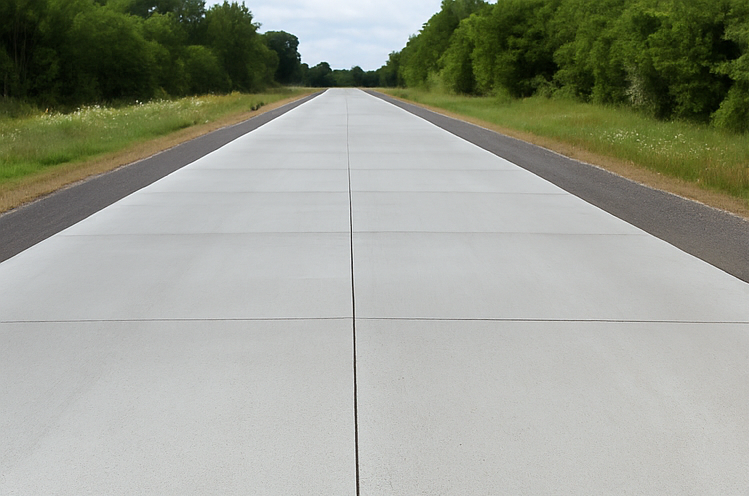
Concrete Road Construction
Concrete Roads Standards, & Guidelines
Concrete roads are becoming increasingly popular due to their superior strength, durability, and long-term cost-effectiveness. From national highways to local municipal streets, concrete roads are now being preferred over traditional bituminous roads in many applications.
What is a Concrete Road?
A concrete road is a rigid pavement constructed using Portland cement concrete. Unlike flexible bituminous roads, concrete roads distribute vehicular loads over a wide area due to their rigid nature, offering a longer lifespan and reduced maintenance.
Advantages of Concrete Roads
-
Longer Service Life (20–40 years)
-
Low Maintenance Cost
-
Resistant to Water and Oil Spills
-
Better Load Distribution
-
Suitable for Heavy Traffic
-
High Reflectivity - Reduces Lighting Costs
Types of Concrete Pavement
-
Jointed Plain Concrete Pavement (JPCP)
-
Jointed Reinforced Concrete Pavement (JRCP)
-
Continuously Reinforced Concrete Pavement (CRCP)
-
Prestressed Concrete Pavement (PCP)

Indian Standards and Guidelines for Concrete Roads
1. IRC Codes (Indian Roads Congress)
-
IRC: 58-2015 - Guidelines for the design of plain jointed rigid pavements for highways.
-
IRC: 15-2017 - Standard specifications and code of practice for construction of concrete roads.
-
IRC: SP: 76 - Guidelines for warm mix asphalt for concrete road overlay.
2. MoRTH Specifications
-
As per the Ministry of Road Transport and Highways (MoRTH), Section 1500 in the specification book details concrete road work.
Construction Process of Concrete Roads
1. Subgrade Preparation
-
Earthwork
-
Compaction
-
Sub-base placement (granular or stabilized)
2. Formwork and Shuttering
-
Steel or wood forms aligned to desired shape and slope
3. Reinforcement (if required)
-
Dowels and tie bars
4. Concrete Mixing and Placement
-
Use of transit mixers
-
Slump control
-
Placement using manual or mechanical paver
5. Compaction and Finishing
-
Vibrators or screed
-
Surface finishing tools
6. Curing
-
Membrane curing or wet curing for 14 days minimum
7. Joint Cutting and Sealing
-
Longitudinal and transverse joints
-
Filled with elastomeric sealants

Commonly Used Concrete Grades
-
M30 to M50 are commonly used for rigid pavements
-
Mix design as per IS: 10262
Quality Control Parameters
-
Slump Test
-
Cube Strength Test (7 and 28 days)
-
Surface evenness (using straight edge)
-
Thickness check
-
Joint alignment check
Sustainability Aspect
-
Less carbon footprint in long term due to low maintenance
-
Can incorporate industrial waste (fly ash, GGBS)
-
Reflects light, reducing road heat island effect
Concrete roads are the future of sustainable and heavy-duty infrastructure. With proper design, execution, and maintenance, they can serve effectively for decades. Following IRC and MoRTH guidelines, using quality materials, and adopting latest technology are key to successful concrete road construction.
Frequently Asked Questions (FAQs)
Q1: Is concrete road better than asphalt?
A: Yes, concrete roads have a longer lifespan, lower maintenance, and are more sustainable. However, the initial cost is higher compared to asphalt roads.
Q2: What is the ideal thickness of a concrete road?
A: Depends on the traffic load:
-
Low traffic: 150–200 mm
-
Medium traffic: 200–250 mm
-
Heavy-duty: 300 mm or more
Q3: Can concrete roads be laid in rainy season?
A: It's not recommended. Rain affects compaction, finishing, and curing. Water may also dilute the mix and weaken concrete strength.
Q4: How long does concrete road curing take?
A: Minimum 14 days. For blended cements (PPC or PSC), it may extend to 21 days.
Q5: What is the cost of 1 km of concrete road in India?
A: Varies by width, grade, and region, but typically:
-
Single-lane (3.75 m): ₹ 1.5–2 crore
-
Two-lane (7 m): ₹ 3–4 crore
