Concrete in Nuclear Power Plants: Safety, Strength & Shielding
Concrete plays a critical and irreplaceable role in the design, construction, and long-term operation of nuclear power plants. As one of the most versatile construction materials, concrete is used extensively due to its structural integrity, shielding capabilities, fire resistance, and durability. In nuclear facilities, where both safety and longevity are paramount, concrete structures are vital to ensuring containment, stability, and protection from radiation.
Why is Concrete Essential in Nuclear Power Plants?
-
Radiation Shielding: Concrete can absorb and attenuate radiation (especially gamma rays and neutrons), making it a vital barrier to protect workers and the environment.
-
Structural Strength: Concrete provides a robust framework to support massive reactors, turbines, and containment structures.
-
Durability: Nuclear plants are designed for a lifespan of 40–60 years or more. Concrete’s resistance to weathering, chemicals, and thermal loads ensures long-term performance.
-
Fire Resistance: Concrete’s non-combustible nature makes it an effective fire barrier.
-
Thermal Mass: Concrete helps regulate temperature fluctuations by absorbing and slowly releasing heat.
Key Areas Where Concrete is Used in Nuclear Plants
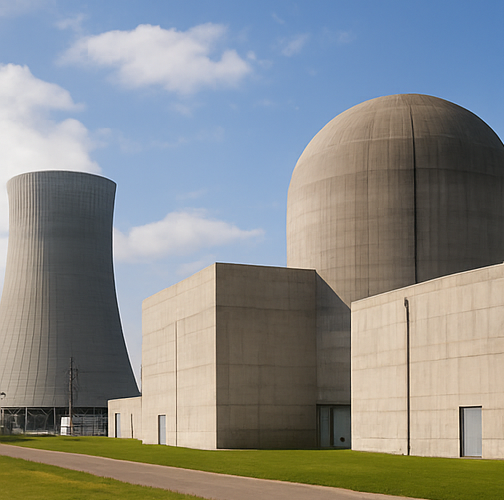
1. Reactor Containment Buildings
-
Purpose: To contain radioactive materials in the event of a core meltdown or accident.
-
Structure: Typically constructed with reinforced, pre-stressed concrete (up to 1.2–2.5 meters thick).
-
Features: Designed to resist internal pressure, seismic activity, and external impacts (e.g., aircraft crash).
2. Radiation Shielding Walls
-
Usage: In walls surrounding reactor vessels, control rooms, and spent fuel areas.
-
Type: Often uses heavyweight concrete with high-density aggregates like barite, magnetite, or hematite.
-
Function: Reduces exposure to ionizing radiation by absorbing gamma rays and neutrons.
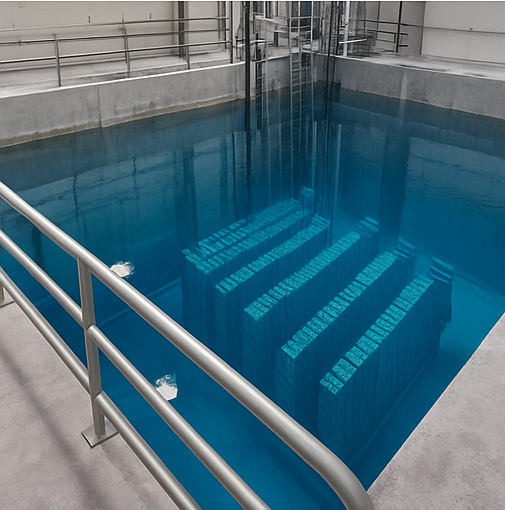
3. Spent Fuel Pools (Cooling Ponds)
-
Function: Stores used nuclear fuel rods under water, which cools and shields radiation.
-
Material: Concrete basins with liners to prevent leakage and corrosion.
4. Foundations and Structural Base Slabs
-
Load-Bearing: Concrete foundations support reactors, turbines, and cooling towers.
-
Design Criteria: Must handle static and dynamic loads, including seismic forces.
5. Auxiliary Structures
-
Includes: Cooling tower bases, control buildings, turbine halls, tunnels, and service shafts.
-
Purpose: Supports the full operational environment of the plant.
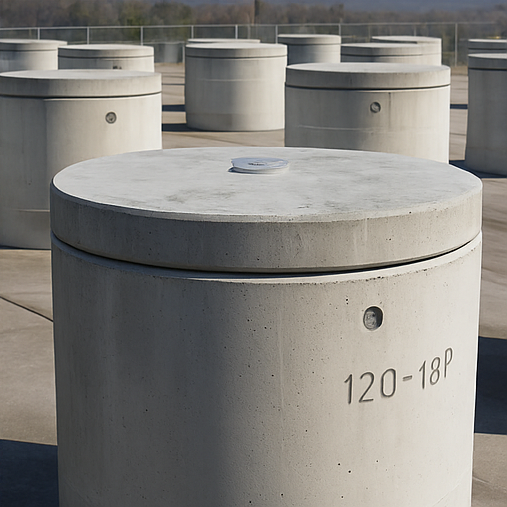
6. Waste Management Facilities
-
Storage: Concrete containers (overpacks) and vaults are used to store low- and intermediate-level radioactive waste.
-
Durability: Must last for decades or even centuries in some cases.
Types of Concrete Used in Nuclear Facilities
1. Normal Weight Concrete
-
Used for general structural components such as floors, beams, and non-shielding walls.
2. High-Density (Heavyweight) Concrete
-
Contains dense aggregates like barite, magnetite, hematite, or steel scrap.
-
Density ranges from 3200–5000 kg/m3.
-
Primarily used for radiation shielding.
3. High-Performance Concrete (HPC)
-
Designed for high strength, low permeability, and durability.
-
Suitable for areas subjected to radiation and thermal gradients.
4. Self-Compacting Concrete (SCC)
-
Flows under its own weight without vibration.
-
Ideal for densely reinforced sections like reactor walls.
Challenges Faced by Concrete in Nuclear Plants
-
Radiation-Induced Degradation:
-
Neutrons and gamma rays can cause micro-cracking or chemical alterations in concrete over long periods.
-
-
Thermal Stresses:
-
Extreme heat near the reactor core can lead to expansion and thermal fatigue.
-
-
Aging and Alkali-Silica Reaction (ASR):
-
Long-term chemical reactions between aggregates and alkalis in cement may cause internal expansion.
-
-
Containment Leak Tightness:
-
Cracking or shrinkage in containment concrete can jeopardize safety.
-

Advances and Innovations in Nuclear Concrete
-
Nano-Engineered Concrete: Enhances durability and reduces permeability.
-
Fiber-Reinforced Concrete: Improves tensile strength and crack resistance.
-
Smart Concrete: Embedded sensors monitor temperature, stress, and radiation damage.
-
Self-Healing Concrete: Contains bacteria or chemicals that fill cracks automatically when exposed to moisture.
FAQs
Q1. Is concrete affected by radiation?
A: Yes, long-term exposure to neutron radiation can degrade concrete's microstructure. However, proper mix design and shielding strategies significantly mitigate this.
Q2. Why is heavyweight concrete used in nuclear power plants?
A: It provides superior radiation shielding due to higher density and is used in containment walls and shielding vaults.
Q3. Can concrete in nuclear plants crack or fail?
A: While concrete is durable, aging, thermal stress, and chemical reactions can cause degradation. Regular monitoring and maintenance are essential.
Q4. How long does concrete in a nuclear plant last?
A: Designed for 40–60 years or more, but with maintenance, it can last beyond a century.
Q5. Is concrete recyclable after decommissioning a nuclear plant?
A: It depends on contamination. Clean sections can be crushed and reused, while radioactive parts are stored as waste.
Concrete remains the backbone of nuclear power infrastructure. Its unparalleled ability to bear structural loads, shield radiation, and resist environmental challenges makes it a critical material for nuclear safety. As the global demand for clean energy rises, the innovation and precision in concrete design for nuclear plants will play a key role in shaping the future of sustainable and secure energy systems.