
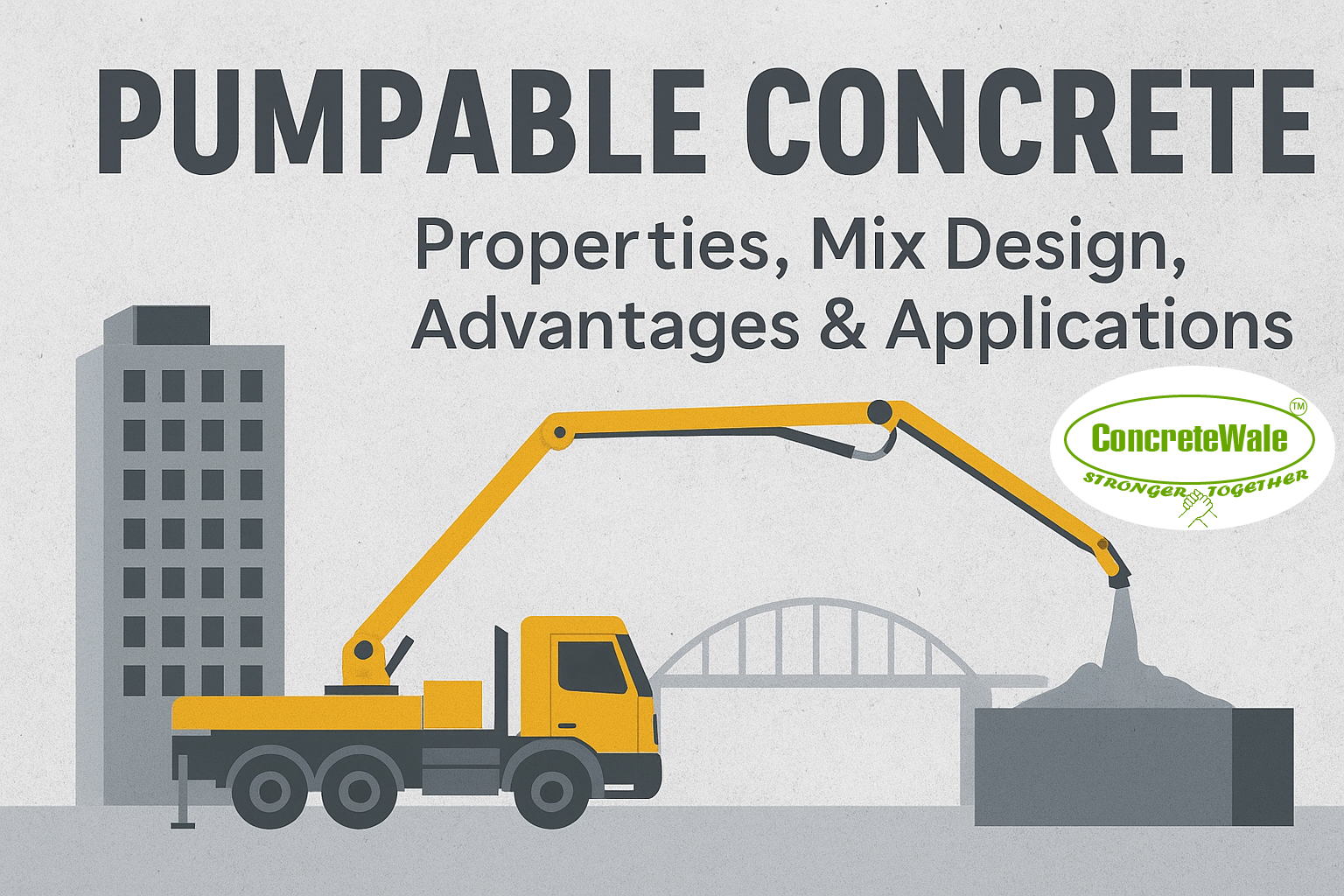
Pumpable Concrete: A Complete Guide
Concrete is one of the most widely used materials in construction, but when it comes to placing concrete in high-rise buildings, long spans, or areas with limited access, traditional methods often fall short. That’s where pumpable concrete comes in. It is specially designed to be transported and placed using concrete pumps, making modern construction faster, easier, and more efficient.
What is Pumpable Concrete?
Pumpable concrete is a concrete mix designed to flow easily through a pipeline under pressure without causing blockages or segregation. Unlike normal concrete, it requires careful proportioning of cement, aggregates, water, and admixtures to ensure smooth pumping.
In simple words: it’s a type of concrete that can be pushed through pipes and hoses by a pump and reach places where manual pouring is difficult.
Why Pumpable Concrete is Needed
-
High-rise construction – concrete can be pumped to great heights.
-
Large horizontal distances – e.g., tunnels, bridges, or long slabs.
-
Time saving – faster placement compared to manual methods.
-
Labor saving – reduces heavy lifting and manual handling.
-
Quality control – ensures uniform and continuous placement.
Properties of Pumpable Concrete
For concrete to be pumpable, it must have:
-
Workability: Easy flow without segregation. (Slump usually 75–150 mm)
-
Cohesion: Mix should not separate while flowing through pipes.
-
Lubrication layer: Fine particles like sand, cement, and water form a thin film inside the pipe, reducing friction.
-
Correct aggregate grading: Smooth combination of fine and coarse aggregates.
Mix Design Considerations
To achieve pumpable concrete, the following must be controlled:
-
Cement Content: Sufficient to coat aggregates and maintain lubrication.
-
Water-Cement Ratio (w/c ratio): Usually between 0.4 – 0.6. Too much water reduces strength, too little reduces flow.
-
Aggregates: Well-graded and rounded aggregates improve flow. Maximum aggregate size is usually 20 mm for pumping.
-
Admixtures: Superplasticizers and air-entraining agents are often used to enhance workability and reduce friction.
Types of Pumps Used
-
Line Pumps – Portable, used for smaller projects, horizontal pumping.
-
Boom Pumps – Mounted on trucks, with hydraulic arms to reach heights and long distances.
Advantages of Pumpable Concrete
- Can be placed in high-rise buildings easily.
- Faster and more economical for large pours.
- Ensures better quality and homogeneity.
- Reduces labor and improves safety at site.
- Suitable for difficult locations like tunnels, bridges, and congested areas.
Limitations
⚠️ Requires precise mix design, otherwise blockages may occur.
⚠️ Pumping equipment and setup cost is high.
⚠️ Continuous supply of concrete is necessary – delays can cause pipeline blockages.
Applications of Pumpable Concrete
-
High-rise buildings
-
Bridges and flyovers
-
Tunnels and dams
-
Large industrial floors
-
Infrastructure projects requiring speed and quality
Pumpable concrete has revolutionized modern construction. It saves time, labor, and cost while ensuring better quality and efficiency. With urbanization and the need for high-rise and large-scale projects, pumpable concrete is no longer an option – it’s a necessity.
