
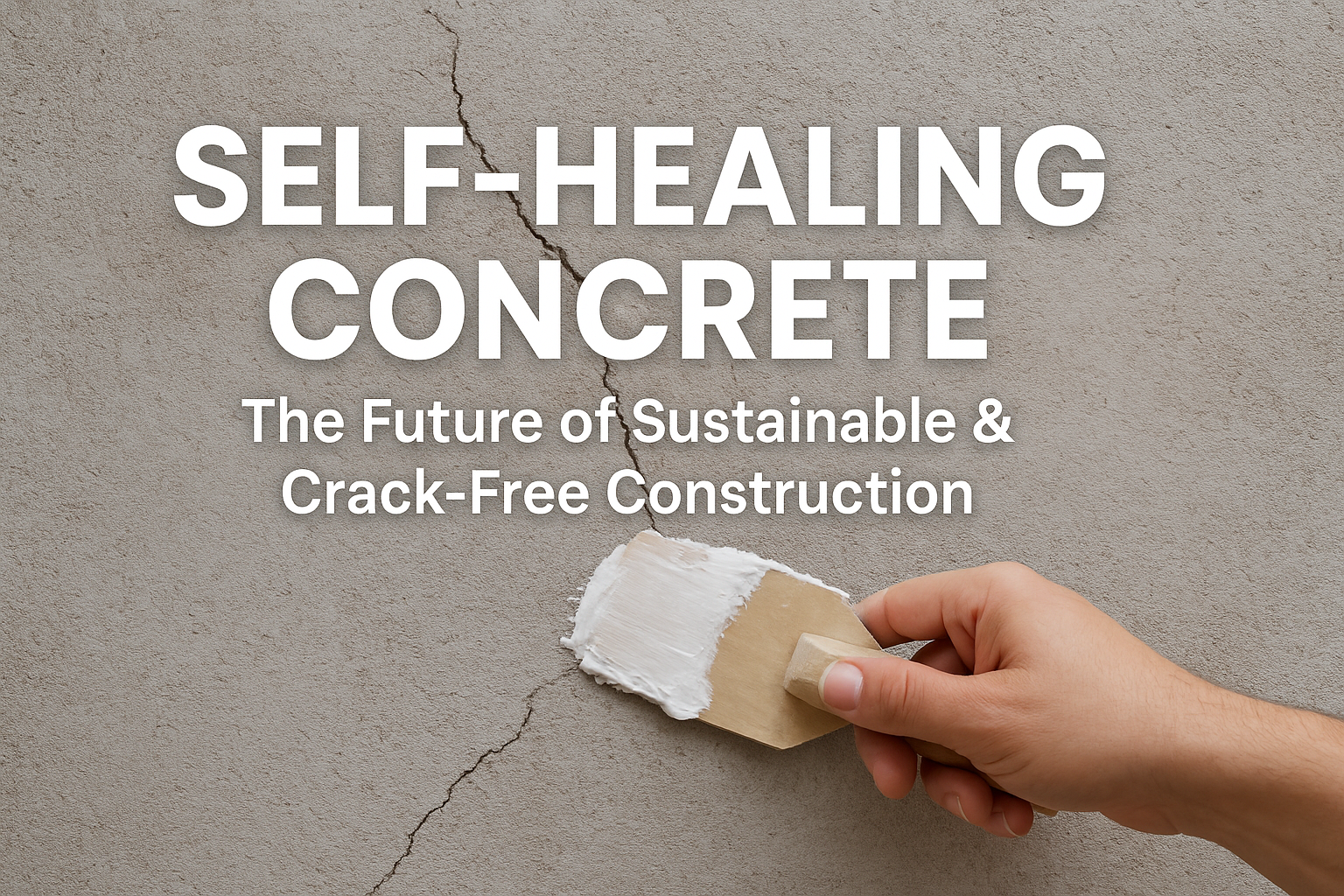
Self-Healing Concrete: The Future of Sustainable Construction
The Innovative Material That Repairs Itself and Extends Structural Lifespan
Concrete is the most widely used construction material in the world, but it comes with one major drawback – cracking. Over time, environmental conditions, heavy loads, and natural wear cause cracks, leading to reduced strength, water seepage, and costly repairs. Self-healing concrete offers a revolutionary solution by repairing its own cracks, increasing durability, and reducing maintenance costs.
What is Self-Healing Concrete?
Self-healing concrete is a smart building material that has the ability to repair cracks autonomously without human intervention. Inspired by biological systems where living organisms heal themselves, this concrete is designed to close small cracks and restore its original properties, significantly extending the life of structures.
How Does Self-Healing Concrete Work?
There are several mechanisms through which concrete can heal itself, including:
-
Autogenous Healing
-
Relies on unhydrated cement particles in concrete.
-
When cracks form, water enters and hydrates these particles, filling the cracks naturally.
-
-
Bacterial Healing
-
Special bacteria such as Bacillus subtilis are embedded in the concrete.
-
When cracks occur, water activates the bacteria, which produce limestone (calcium carbonate) to seal cracks.
-
-
Capsule-Based Healing
-
Microcapsules filled with healing agents (e.g., epoxy or sodium silicate) are mixed into the concrete.
-
When cracks rupture these capsules, the agents are released, filling and sealing the cracks.
-
-
Vascular Healing
-
A network of hollow tubes is embedded within the concrete.
-
Healing agents flow through these tubes to damaged areas, similar to how blood vessels work in the human body.
-
Types of Self-Healing Concrete
-
Bacteria-Based Self-Healing Concrete
-
Microcapsule-Based Self-Healing Concrete
-
Shape-Memory Materials (SMM) Concrete
-
Vascular Network Concrete
-
Autogenous Healing Concrete
Each type has different applications depending on cost, structure size, and required strength.
Advantages of Self-Healing Concrete
-
Increased Durability – Extends the lifespan of structures by preventing crack propagation.
-
Lower Maintenance Costs – Reduces the need for frequent repairs and replacements.
-
Waterproofing Ability – Prevents water seepage, protecting steel reinforcement from corrosion.
-
Environmental Sustainability – Reduces cement usage over time, lowering CO₂ emissions.
-
Cost-Effective in the Long Run – Though initial costs are high, lifetime expenses decrease significantly.
Applications of Self-Healing Concrete
-
Bridges and Highways
-
Tunnels and Dams
-
Marine and Offshore Structures
-
High-Rise Buildings
-
Historical Monument Preservation
-
Nuclear Power Plants
Future of Self-Healing Concrete
With growing emphasis on sustainable construction and smart materials, self-healing concrete is expected to become mainstream in the next decade. Researchers are working on more cost-effective and scalable production methods, making it a potential game-changer in infrastructure development.
Self-healing concrete represents a breakthrough in construction technology, offering durability, sustainability, and cost-efficiency. As the industry moves toward smart infrastructure, adopting this innovative material can significantly enhance the lifespan and safety of structures.
