
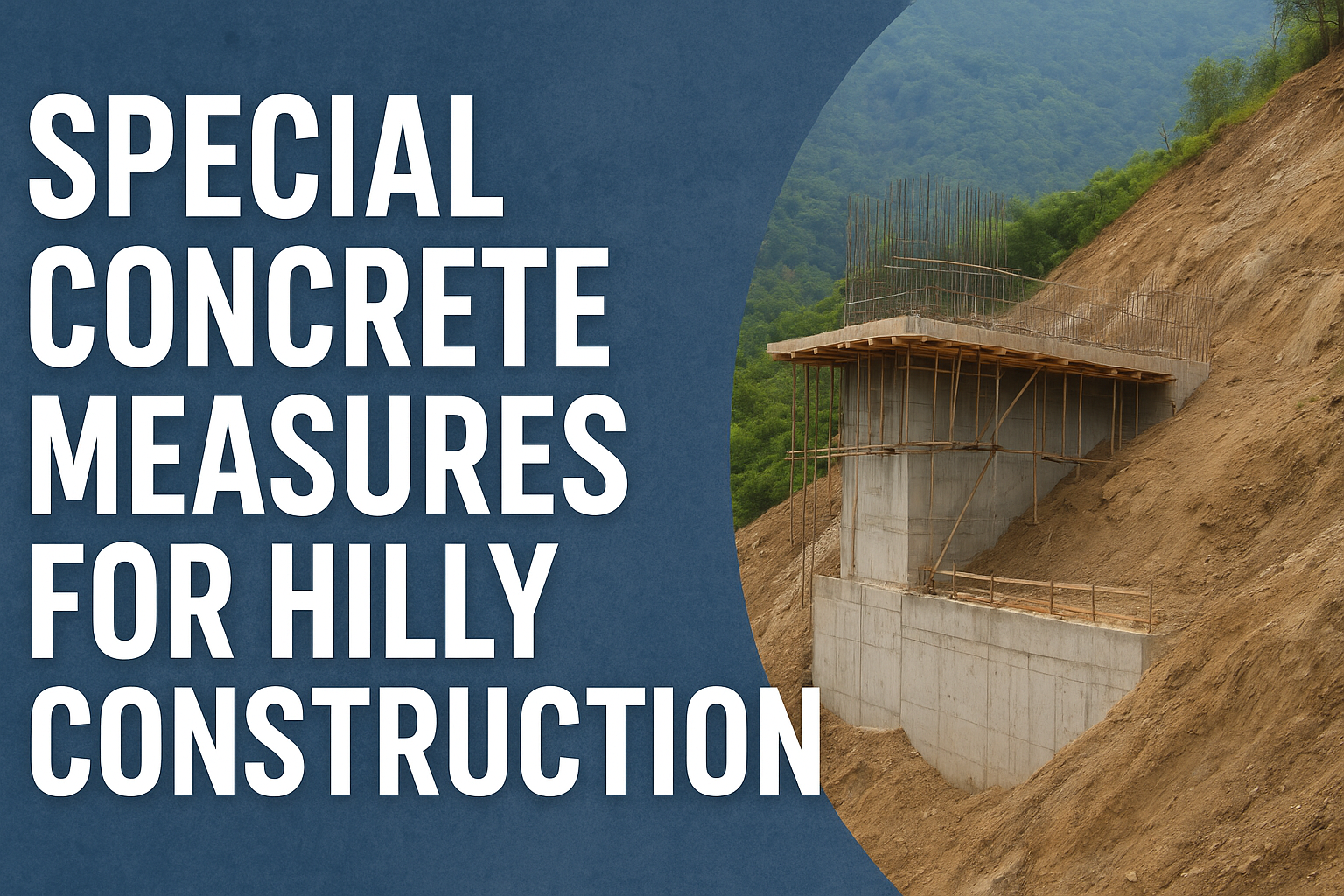
Special Concrete Measures Taken in Hilly Areas Construction
Key Concrete Techniques to Ensure Safety and Stability in Mountain Construction
Constructing buildings, roads, and infrastructure in hilly areas presents unique challenges compared to plain terrains. Steep slopes, unstable soil, heavy rainfall, and seismic activity demand specialized construction techniques, particularly in concrete works. Using the right concrete measures ensures safety, longevity, and structural stability in such demanding environments.
Challenges in Hilly Area Construction
-
Steep Slopes & Uneven Terrain – Requires special design and formwork to prevent concrete slippage.
-
Soil Instability & Landslides – Reinforcement and retaining structures are critical.
-
Seismic Activity – Earthquake-resistant concrete mixes and structural designs are mandatory.
-
Weather Conditions – Low temperatures, high rainfall, and freezing conditions can affect concrete curing.
Special Concrete Measures for Hilly Area Projects
1. High-Strength Concrete Mixes
-
Concrete with higher compressive strength (M30 and above) is used to withstand heavy loads and prevent cracks.
-
Use of supplementary cementitious materials (SCMs) like fly ash and silica fume improves durability and reduces permeability.
2. Use of Admixtures
-
Water-reducing admixtures for workable yet strong mixes in sloped areas.
-
Accelerators and retarders to control setting time in varying weather conditions.
-
Air-entraining admixtures to resist freeze-thaw damage.
3. Retaining Walls & Reinforced Slopes
-
RCC retaining walls are constructed to stabilize slopes and prevent landslides.
-
Proper drainage layers behind retaining walls prevent hydrostatic pressure build-up.
4. Proper Formwork and Shuttering
-
Strong and stable formwork is required to hold concrete in place on steep slopes.
-
Use of steel or aluminum formwork ensures accurate alignment and reduces leakage.
5. Seismic-Resistant Concrete Design
-
Use of ductile detailing and high-grade reinforcement bars with concrete.
-
Shear walls and cross bracing in concrete structures to withstand earthquake forces.
6. Curing Techniques in Challenging Terrain
-
Use of curing compounds where water curing is difficult.
-
Insulated blankets and coverings to maintain required temperature for hydration in cold climates.
7. Precast Concrete Elements
-
Precast beams, slabs, and panels reduce onsite work in inaccessible or steep areas.
-
Ensures consistent quality and faster construction.
Drainage & Waterproofing Considerations
-
Slope drainage systems to prevent water accumulation around structures.
-
Waterproof coatings and membranes on concrete surfaces to prevent seepage and erosion.
Environmental & Sustainable Practices
-
Use of eco-friendly concrete mixes with reduced cement content.
-
Incorporation of local aggregates to minimize transportation costs and carbon footprint.
Hilly area construction demands a strategic approach to concrete selection, mixing, and placement. From high-strength mixes to seismic-resistant designs and proper curing, each step ensures structural integrity and safety.
At Concretewale.com, we bring together experts, suppliers, and innovative products to make challenging constructions reliable and long-lasting.
