Bendable Concrete
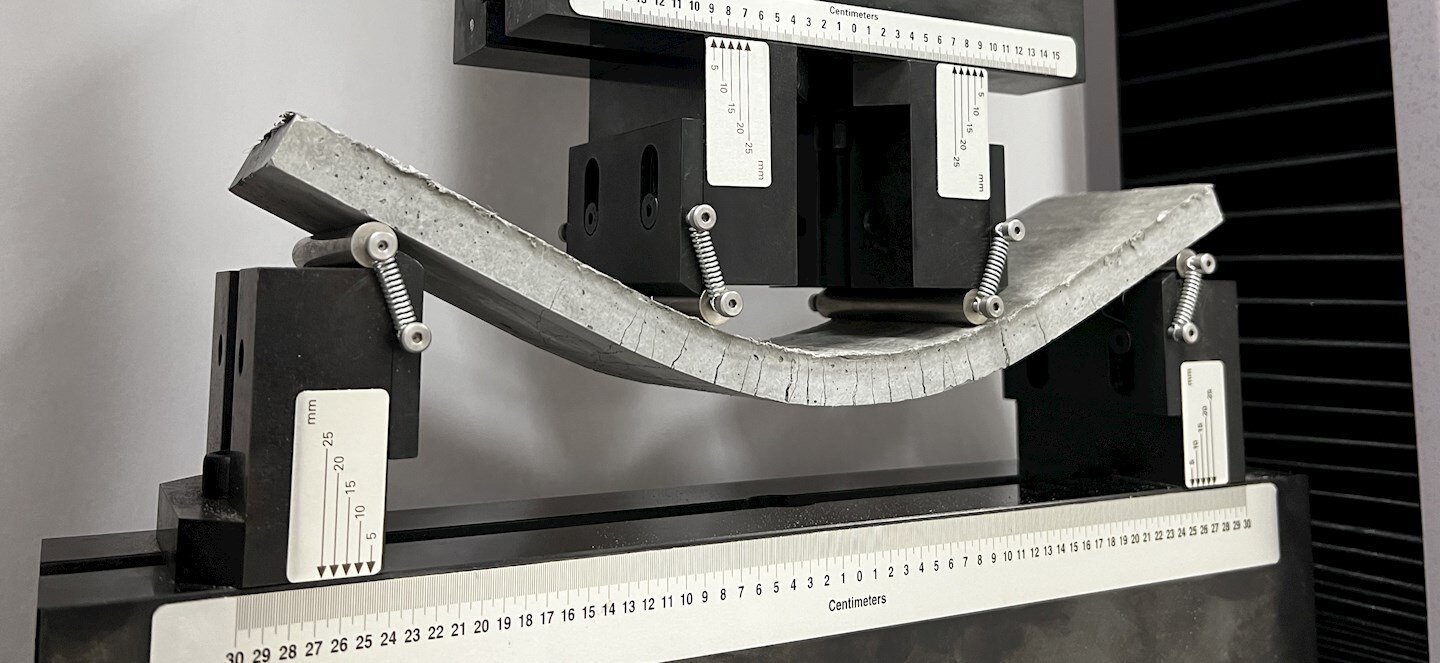
The concrete material known as bendable concrete, often referred to as Engineered Cementitious Composite (ECC), is more malleable and ductile than regular concrete. It is created using a unique mixture of admixtures, fibers, water, cement, and sand. The flexibility of ECC is a result of the fibers. Usually, they are made of steel, glass, or polypropylene.
The materials used in bendable concrete are:
Cement: Portland cement is commonly the type of cement used in flexible concrete, but other forms of cement, like fly ash cement or slag cement, can also be utilized.
Sand: Fine-grained sand with a low silt percentage is often used in flexible concrete.
Water: Clean, impure water must be utilized when making flexible concrete.
Fibers: Polypropylene, steel, or glass are the most common materials used to make the fibers in bendable concrete. The flexibility of ECC is a result of the fibers.
Mixtures: To enhance the qualities of flexible concrete, mixtures are added. In ECC, admixtures such superplasticizers, air-entraining agents, and retarders are frequently utilized.
Properties of Blended Concrete
Flexibility: Concrete that is flexible can flex and bend without breaking or cracking. This makes it perfect for uses like bridges, highways, and buildings that are vulnerable to earthquakes or other seismic activity, while regular concrete would be too brittle.
Durability: Concrete that can be bent is more robust than conventional concrete. Even in the most extreme circumstances, it is less likely to crack or break.
Bendable concrete has the capacity to repair itself. This implies that little cracks can heal on their own and don't require maintenance.
Lightweight: As compared to conventional concrete, bendable concrete is lighter. It may be simpler to use and transport as a result.
Low carbon impact: When compared to conventional concrete, bendable concrete has a smaller carbon footprint. This is due to the fact that less cement, a significant contributor to greenhouse gas emissions, is used.
High tensile strength: Concrete that is capable of being bent has a high tensile strength, meaning it can bear tensile forces without breaking. This is crucial in situations where bending or stretching forces are applied to the concrete.
Good crack control: Concrete that is bendable has good crack control. This is so that the fissures may be bridged and kept from getting wider by the concrete's fibers.
Good workability: Concrete that can be bent is simple to handle. Due to its low water-to-cement ratio, which makes it less sticky and simpler to pour and compact, this is the case.
Applications
· Bridges: Bendable concrete can be used to construct bridges that are more resistant to earthquakes and other seismic activity.
· Building facades: Bendable concrete can be used to create building facades that are more resistant to cracking and damage.
· Earthquake-resistant buildings: Bendable concrete can be used to construct earthquake-resistant buildings that are more likely to withstand the forces of an earthquake.
· Roads and pavements: Bendable concrete can be used to construct roads and pavements that are more resistant to cracking and damage.
· Tunnel linings: Bendable concrete can be used to line tunnels that are more resistant to the forces of water pressure.
· Precast concrete products: Bendable concrete can be used to produce precast concrete products, such as beams, columns, and panels, that are more resistant to cracking and damage.
· Concrete canvas: Bendable concrete can be used to create concrete canvas, which is a thin, flexible sheet of concrete that can be used for a variety of applications, such as roofing, cladding, and flooring.
Bendable concrete is a promising new material with the potential to revolutionize the construction industry. It is more flexible, durable, and self-healing than traditional concrete, and it has a lower carbon footprint. These advantages make it ideal for a wide range of applications, including those that are subject to harsh conditions or seismic activity.
