Concrete 4D Printing
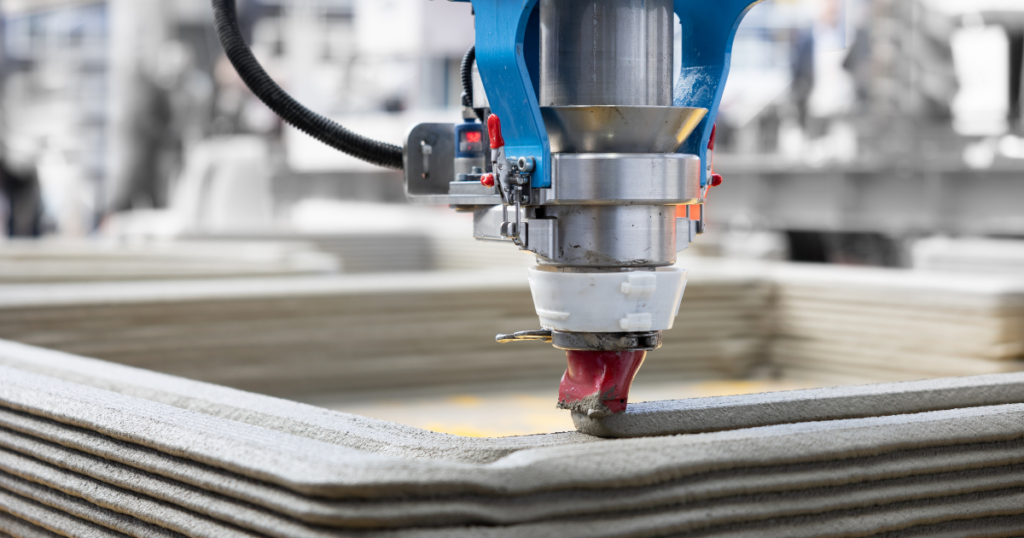
An advancement to 3D printing is 4D printing, in which materials that are built through the printer can alter themselves based on environmental stimuli after formation. These matters hold special prominence in construction, especially with aspects of concrete. Thus, 4D printing utilising smart materials enables the creation of structures that can change their geometry in response to environmental stimuli and thus realise increased durability, functionality, and recyclability in developing concrete infrastructure.
The concept of 4D printing was pioneered by architect Skylar Tibbits, a professor and director of MIT’s Self-Assembly Laboratory. It builds upon established 3D printing technology, but with a revolutionary twist: it again raises the bar of the fourth parameter, which is ‘time’. Smart materials, which can respond physically to changes in the environment, have been illustrated by Tibbits’ ideas of 4D printing as a technology that can transform many fields, including the construction industry.
Applications in the Concrete Industry
- Smart Infrastructure: The significant value of 4D-printed concrete is mainly in the application of smart structure that possesses a certain adaptability to the gradual depletion of the material under the continuous effect of the environment. This is seen in infrastructural developments with features such as: Fiber reinforced self-healing concrete – this innovation is a concrete that has the potential to repair cracks by itself thus reducing the chances of structures getting damaged and also lowering the cost of maintaining structures.
- Disaster-Resilient Construction: 4D printed surroundings may be easily associated with the high adaptability and performance of the regions susceptible to various kinds of natural emergencies. For example, due to the usage of 4D-printed concrete in the construction of the building, would automatically shift position depending on the prevailing or expected weather conditions, or avoid areas that are prone to future earthquakes.
- Hydroelectric Power Plants: As long as it is applied to hydroelectric power plants, 4D printing is effective in maintaining water flow control and monitoring structures’ health. There are operational aspects of adaptive concrete components that deform that of the concrete structure in response to changes in water levels and pressures for optimal output and security.
